Article: Your Face Holds Tension: What Stress Can Look Like in the Skin
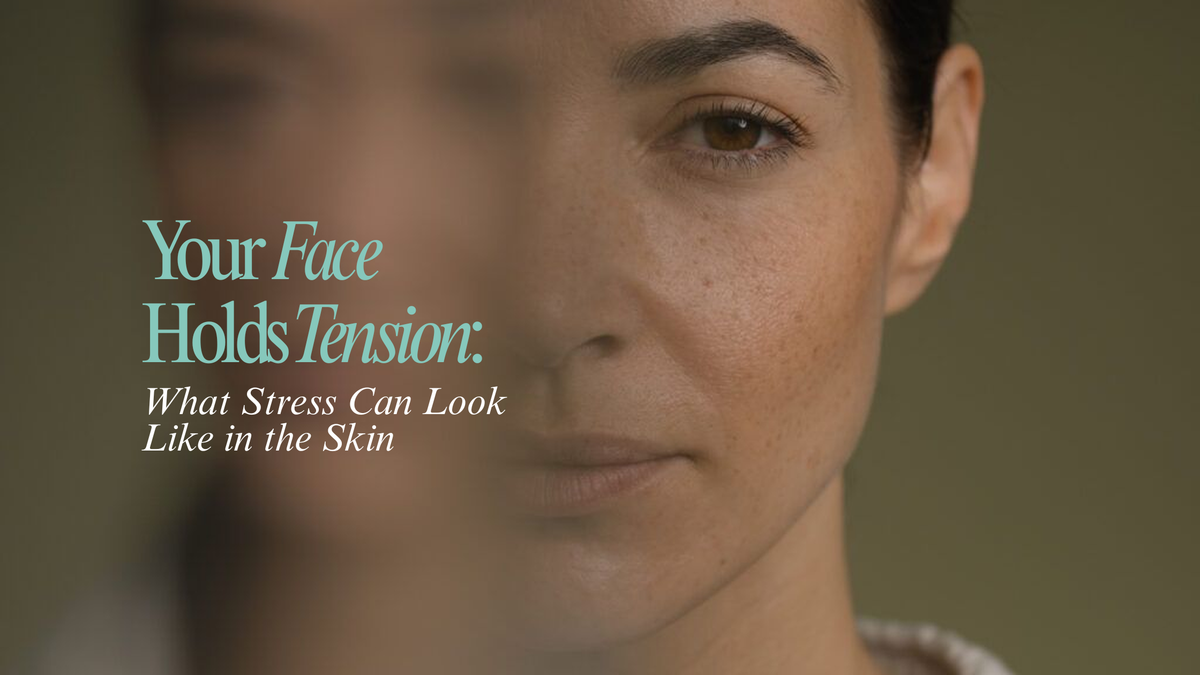
Your Face Holds Tension: What Stress Can Look Like in the Skin
Have you ever caught your reflection at the end of a hard week and thought you looked like someone else? Your features hadn't changed. You just looked more tired and guarded, a little less like yourself.
After more than 25 years of working with skin, I've learned this: the face is not only a surface. It's where we feel things and show them, and often where we hold them. Stress doesn't only live in your schedule or your shoulders. It can show up in your jaw, your brow, the area around your eyes and the skin itself.
That doesn't mean stress "ages" you overnight, or that every line is a sign something is wrong. It means how you live and feel is part of how your skin looks. Ignoring that leaves out half the picture.
What Science Tells Us About Stress and the Skin
Let's be clear about what we know, what we're still learning, and what comes from experience.
What is well established: The skin and the nervous system talk to each other constantly. Under psychological stress, the body releases stress hormones, including cortisol, and these affect many tissues, including the skin. Controlled research has shown that psychological stress can slow the recovery of the skin barrier, the outer layer that holds moisture in and keeps irritants out. Dermatologists also widely recognize that stress can trigger or worsen flares of acne, eczema, psoriasis and rosacea.
What is supported but more nuanced: Poor sleep, which so often comes with stress, affects how we look. Studies of facial appearance have found that people tend to rate sleep-deprived faces as more tired, and sometimes less healthy. That's perception, not permanent change, but perception is how we experience each other every day.
What is still emerging: Researchers are studying how ongoing stress may affect skin aging over time, including inflammation and how skin cells repair themselves. It's a serious field, but much of it is early, and I'm careful not to turn early findings into promises.
What comes from my practice: I see tension in faces every day. Clenched jaws, a brow that never fully relaxes, shallow breathing that shows up as a held, tight expression. I can't measure this the way a laboratory can, but I've seen it often enough to take it seriously.
The Many Ways Stress Can Show Up on Your Face
A tight, guarded expression
We often hold tension without noticing: a furrowed brow during emails, a pursed mouth while concentrating, a jaw that sets when we're worried. Repeated expressions are part of how expression lines form. That's normal and human. Lines tell the story of a life lived, and I don't believe they need to be erased. But when the face is braced all the time, it can look stern or tired even when you feel fine.
The jaw: where so many of us hold everything
Clenching and grinding, called bruxism, are commonly linked with stress. It's well documented that this can cause jaw discomfort and headaches, and over time can enlarge the masseter, the chewing muscle at the side of the jaw. Visually, a heavily used jaw can make the lower face look wider or more square.
If you suspect you grind your teeth, especially at night, talk to your dentist. That's not an esthetic problem first. It's a health one.

Puffiness and that "heavy" morning look
Puffiness has many causes: salt, alcohol, allergies, crying, sleeping position, hormones, and simply lying flat overnight. Stress tends to bring several of these together. We sleep less, eat differently, drink a little more wine, and wake up looking swollen around the eyes.
Most of this is temporary fluid, and it settles. Persistent or one-sided swelling is different and deserves a visit to your doctor.
Dull, reactive or unpredictable skin
When the barrier is slower to recover, skin can feel tighter, drier and more sensitive. Products you normally tolerate may suddenly sting. Breakouts can appear at the worst moment. In my practice, when someone tells me their skin has "changed out of nowhere," I always ask what's been happening in their life. The answer is rarely nothing.
What Facial Massage and Hands-On Work Can and Cannot Do
This is where honesty matters, because the beauty world often overpromises.
What hands-on facial work can realistically offer: Gentle massage can help a face look less puffy for a while, likely by encouraging fluid to move. (I explore this more in Your Lymphatic System Is Your Skin's Waste Management.) It increases surface circulation, which is why skin often looks brighter and more awake afterward. Many people find it deeply relaxing, and relaxing tense muscles can soften a held expression. Small studies suggest facial massage may support how skin looks and feels, but the research is limited, and I treat it that way.
What it cannot do: Facial massage does not permanently lift tissue. It does not remove "toxins." It is not a replacement for medical treatment, and I'm cautious about any claim that it rebuilds collagen in a meaningful, lasting way. Strong evidence simply isn't there yet.
What I've learned is that the value of face sculpting work is often in the combination: the immediate visible refresh, the release of held tension, and the ritual itself, a few minutes when you stop bracing. That's the heart of the JL Method. It's not about forcing the face into a different shape. It's about helping it look like itself again.
What I Actually Recommend
You don't need a complicated routine. You need a consistent, intelligent one, and some awareness.
1. Notice where you hold tension. Several times a day, check in: Is your jaw clenched? Is your tongue pressed to the roof of your mouth? Is your brow raised? Just noticing is often enough to let go.
2. Protect your skin barrier, especially during stressful periods. This is when to simplify, not experiment. Use a gentle cleanser, a moisturizer that suits your skin and daily sunscreen. Hold back on strong exfoliants and actives if your skin feels reactive.
3. Give your face a few minutes of touch. In the evening, with a face oil or balm, use light, slow strokes: along the jaw toward the ears, across the brow outward, gently around the eye area without dragging. Breathe slowly while you do it. The aim is release, not pressure.
4. Respect sleep. It's the least glamorous recommendation and among the most important. If puffiness bothers you, raising your head slightly and cutting back on late salt and alcohol can help.
5. Address the jaw properly. If you clench or grind, see your dentist. A night guard or other support can protect your teeth and your comfort.
6. Know when it's medical. Persistent flares of acne, eczema, psoriasis or rosacea deserve a dermatologist. Ongoing stress, anxiety or exhaustion deserve real support too. Caring for your skin is not a substitute for caring for yourself.
Mind, Heart, Skin: Why the Face Is Never Isolated
This is why my Beauty Reset approach is built on three parts: MIND • HEART • SKIN. You can buy the most advanced serum in the world, but if you live braced and sleep-deprived, your face will tell that story too.
My philosophy, Correct • Repair • Rejuvenate • Preserve, is not about fighting age. It's about keeping skin healthy, resilient and vibrant while preserving what makes you look like you. Stress is part of life. We can't remove it, but we can stop letting it settle so deeply in the face.
A Final Thought
The most beautiful faces I've seen in 25 years were not the ones without lines. They were the ones at ease. Before you reach for another product, try something simpler: unclench your jaw, soften your brow, take one slow breath. Sometimes the most rejuvenating thing you can do for your skin is to stop holding on so tightly.
Frequently Asked Questions
Can stress really affect your skin?
Yes. Research shows psychological stress can slow skin barrier recovery and can trigger or worsen acne, eczema, psoriasis and rosacea flares. Poor sleep linked to stress can also make the face look more tired.
Why does my face look puffy when I'm stressed?
Stress often comes with less sleep, more salt or alcohol, and sometimes crying, all of which can cause temporary fluid retention, especially around the eyes. It usually settles. Persistent swelling should be checked by a doctor.
Does facial massage lift the face?
Facial massage can briefly reduce puffiness, boost surface circulation and relax tense muscles, which can make the face look fresher. It does not permanently lift tissue, and evidence for long-term structural change is limited.
Written by Julie Lindh
Visit author's website

Leave a comment
This site is protected by hCaptcha and the hCaptcha Privacy Policy and Terms of Service apply.